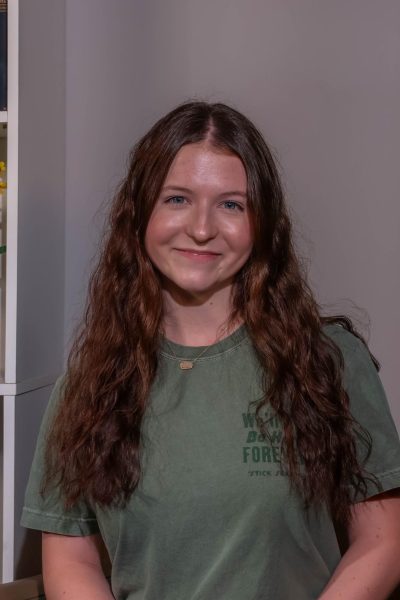




Imagine coming home from a long day at school, dreaming of collapsing onto the couch and snacking until the sun goes down. While that may be the ideal after-school routine for some teenagers, it is not the reality for many Noblesville High School students, whose evenings are spent rushing from the final bell to part-time jobs before returning home late at night.
As NHS students enter young adulthood, many are also dipping their toes into the workforce. Many students have officially begun their employment journey by working part-time jobs outside school. While this balance between school and work may be easy for some students, it can be a struggle for others.
“School is dialing down right now, so I am able to work, do my homework, and go to bed at a reasonable time,” senior Josiah Smith said. “But sometimes I get off work with miles and miles of homework and end up going to bed after midnight.”
Smith recently began employment at Louie’s Tux Shop in the midst of Prom season this past April, and typically finds himself at work about four times a week. Though he often feels stressed balancing both work and school as a busy, graduating senior, he believes that his previous experiences have granted him the capability to push through the challenges.
“It’s challenging in the sense of balancing most activities, but then again I’ve been doing a lot of activities since I was a sophomore, so I’m kind of used to having to balance lots of things at once,” Smith said.
Sophomore Kenzie Wood faces a similarly demanding schedule. Three days a week, she races from NHS to her job at Goldfish Swim School in Carmel, with only 40 minutes between the final bell and the start of her shift. She balances her two lives by choosing workdays based on her personal and school schedules, and ensures that her schoolwork is done on her remaining off-days.
“I work as a swim teacher and lifeguard, and teach ages four months up to 12 years how to swim,” Wood said. “My favorite levels to teach are the baby classes with their moms and the three-year-old class, which is called ‘Junior 1’!”
Not only does Wood enjoy this job, but she believes that it will help her beyond high school and well into her future. She wants to be a second grade teacher as an adult, and believes that teaching at the swim school will help her prepare for college.
“I plan to go to Ball State to major in elementary education,” Wood said. “This will look good on my resume and give me a head start on learning how to be a teacher.”
Wood is not the only NHS student starting her career path in high school. Sophomore Soren McLaughlin has been working at Airborne Studios, a local singing studio, for the past couple years. She sings music for producers that is later recorded and available for other musicians to use.
“This gives me an idea of what I could do for work once I’m out of high school. If I go into music theory or any type of music major in college, this would be beneficial because this work would help me with reading music, composing, and memorizing by ear,” McLaughlin said.
McLaughlin typically works four hour shifts on weeknights and up to 12 hour shifts on the weekends. She works with many adult musicians in these shifts, occasionally including her own mother. Though these shifts may seem long and stressful, some students work triple the amount by maintaining multiple jobs.
“I grew up in Utah, so the labor laws were different and I could start working on my 14th birthday. Since then, I’ve worked at a haunted house in a Utah amusement park, a recreational summer camp, Arby’s, Culver’s, CVS, Smoothie King, and now Crew Carwash,” junior Abby Wigger said.
Wigger says that she struggles to complete her homework and assignments on time because of her rigorous work schedule. To compensate for this busy schedule, Wigger requests days off work and uses her Academic Lab time to get help from teachers and work on homework. However, she still believes that the benefits of working as a high school student outweigh the hardships.
“I think that having a job in high school builds character and forces you to care. It makes you realize that there are adults working jobs that they don’t enjoy because they didn’t figure out their lives when they were young,” Wigger said. “It creates an experience to teach you things, and starting early is helpful.”
Other students agree with Wigger on this subject, and encourage others to take the same steps toward employment. Many NHS students believe that these opportunities have sprouted new skills that they were previously unaware of.
“Working is going to help me build my work ethic, especially for when I go to college next year. It’s hopefully going to help me learn to balance more as life continues,” Smith said.
While Smith says employment strengthened his work ethic, other students report growth in responsibility, communication, and leadership skills.
“I’ve definitely gained leadership skills because I’m the one fully in charge of my classes,” Wood said. “I learned how to be a strong leader and to listen to myself.”
Both Smith and Wood apply these skills into not just their work lives, but additionally their school lives. While these students say employment strengthens their abilities at school, NHS English teacher Connor Buhl offers a contrasting perspective.
“This is going to sound hypocritical and I acknowledge that, but I don’t think that students should be able to work until they are at least 17. School is your job, athletics is your job, and being a young adult is your job,” Buhl said. “Those experiences are far more important than working a minimum wage job doing trivial labor.”
Buhl, a full-time teacher and part-time historic interpreter at Conner Prairie, says that it is common for students to value their paid labor rather than their most prominent labor, which is school. Though he believes that his part-time work increases his awareness of learning techniques that can be further applied to his teaching life, he believes that students lack the maturity to be able to do the same.
“I think you can only be loyal to one or two things, so if you do a sport, art or anything like that, and a job, then you’re putting yourself in a position where you have to choose at times. You need to be realistic, you can’t hold down a job while doing several other clubs and activities, and you have to be okay with that,” Buhl said.
He thinks that logic is key while prioritizing many aspects of life, and believes that students need to be realistic while contemplating this jump into the workforce. He says that students need to understand that it’s impossible to hold down a job while participating in several other clubs and activities, and that is something students have to come to terms with.
“Don’t burn out. If you feel like neither school or employment is bringing you joy, pick school. If you burn out, you will be able to do neither. You have to think, do you want to do the things school is setting you up to do or do you want to work a minimum wage job? That’s what it comes down to,” Buhl said.