

Birds chirp, flowers bloom, and animals are everywhere. This is the picture of spring in Hamilton County, but scientists in Indiana say this picture will disappear if the community fails to protect the endangered species that make it unique.
Hamilton County is home to many different species, all with their own special roles in the ecosystem, but environmental researchers say many of them could be lost due to harmful impacts created by humans. According to the Department of Natural Resources (DNR), Hamilton County waterways are home to a variety of endangered species. Multiple species of local mussels including the clubshell, sheep nose, snuffbox, northern riffleshell, and rayed bean mussels are listed as federally endangered. These mussels help maintain water quality in local rivers and reservoirs by acting as a natural filter, but they are dying off due to habitat destruction and are affected by poor water quality, the very problem they work to prevent.
Scientists say this cry for help is becoming increasingly urgent. In addition to the endangered mussels, other threatened species in the county include round hickorynut and rabbitsfoot mussels, and on land the eastern massasauga reptile, the virginia sneeze weed, and eastern prairie white-fringed plants. Candidates to become threatened in the future are the gold-winger warbler bird and the spotted turtle. Indiana is home to more than 1,100 species in need of conservation according to the DNR.
“Indiana is really diverse from an ecological standpoint,” Amanda Smith, the superintendent of Natural Resources and Education at Cool Creek Nature Center, said. “It has a lot to protect, and it needs a lot of help.”
According to Environmental Science teacher and Conservation Club sponsor Eric Gurulé, there is a common denominator to extinct species.
“Biodiversity alone isn’t necessarily a cause for extinction, but a decrease in biodiversity makes species more prone to extinction,” Gurulé said.
One of the biggest culprits is the traditional American lawn. Smith points out that monocultures are when only one crop is grown in a specific area, which creates a sterile environment that is unable to support native wildlife. The Zoology teacher and co-sponsor of the NHS Conservation Club, Sally Stevens, encourages Hoosiers to adopt a change in tradition.
“One of the things that we’re really trying to work on in Hamilton County are native insects. There’s been a big push lately to try to create more natural yards and natural gardens that would feed native insects,” Stevens said.
Gurulé says the student-led Conservation Club is already leading by example, working to eliminate monocultures on the school grounds.
“In the courtyards here, we planted all native grasses, milkweeds, and other things to increase the butterflies and the insects that are beneficial,” Gurulé said.
Along with taking action in the soil, the Conservation Club is providing education for students to take action themselves. The Conservation Club’s projects are designed to spread awareness and encourage students and Hamilton County residents.
“We put out a lot of videos of messages around Earth Week. We’ve been trying to improve social media posts and just teach people about conservation efforts,” Stevens said. “The last few years we’ve also been focusing heavily on recycling plastic caps and getting them turned into benches for the school.”
The impact of plastic waste is another priority of the group, where they work to find new ways to use existing materials, says Stevens. Rather than contributing to the cycle of waste, items can be managed by following an established framework.
“Reduce, reuse, and recycle is the process of eliminating plastic waste which is really important. The reason it’s in that order is because you want to lessen the amount of plastic that you use in your life,” Stevens said. “Try to use glass material or paper materials when you can. Reuse what you have, don’t throw things away immediately. See if you can reuse them for a different purpose, and then recycle.”
Stevens says projects like recycling plastic caps into benches and making social media videos are one way groups can tackle environmental concerns. But not every solution requires a group of people to invoke change, Phoebe Payne, a member of the conservation club, says environmental impacts are also often shaped by everyday purchases. Awareness and education at the consumer level can play a significant role in waste reduction in the area, and the earth as a whole.
“Thinking twice before your purchases and before you throw something out or give it to Goodwill is a small but important step,” Junior Phoebe Payne said. “With clothes, it’s super easy to just learn how to sew up a hole really quick. Our attention span is just so low that if there’s a problem with one of our things, we just throw it out.”
Payne describes how people can take numerous steps to reduce waste and support conservation efforts to make an impact. She believes even the smallest amount of time and energy can help.
“It doesn’t have to be hard. Just a little change makes a really big difference,” Payne said. “You can literally go outside and pick up the trash, sign petitions, or you can donate.”
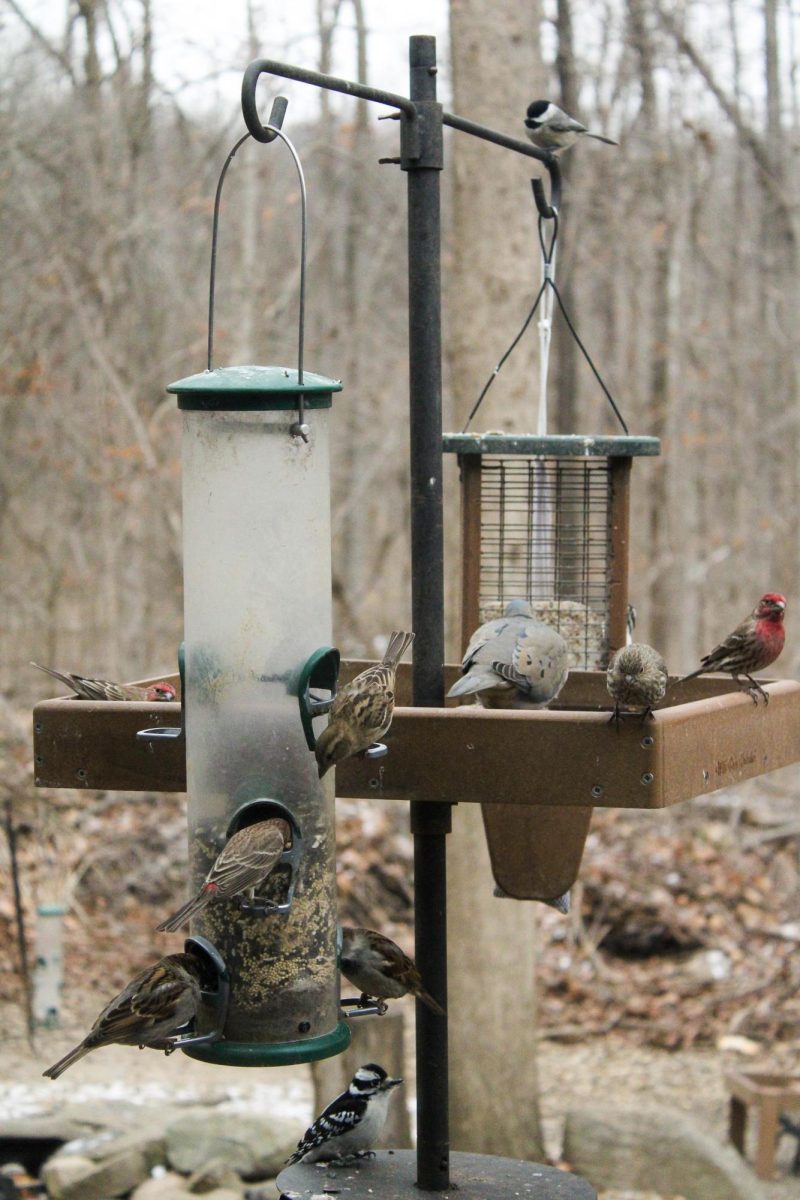
Phoebe also points out that making an impact doesn’t have to be boring or cost money. A simple craft for backyard animals can even make a difference.
“You can make a bird feeder out of a hollowed out orange peel,” Payne said. “You just cut an orange in half, scoop all of it out, cut 4 holes, tie it up with twine, and then put bird feed in it.”
As the Noblesville community enjoys the beauty of Forest Park or White River this spring, local conservationists hope they remember an important message: the future of these ecosystems rests in the collective hands of the public.
“If everybody used one less plastic bottle today, that would be eight billion less plastic bottles,” Payne said. “If everybody did that, then that’s how change is made. It’s not just one person that changes everything. It has to be collective.”