

Contextualizing the Conflict
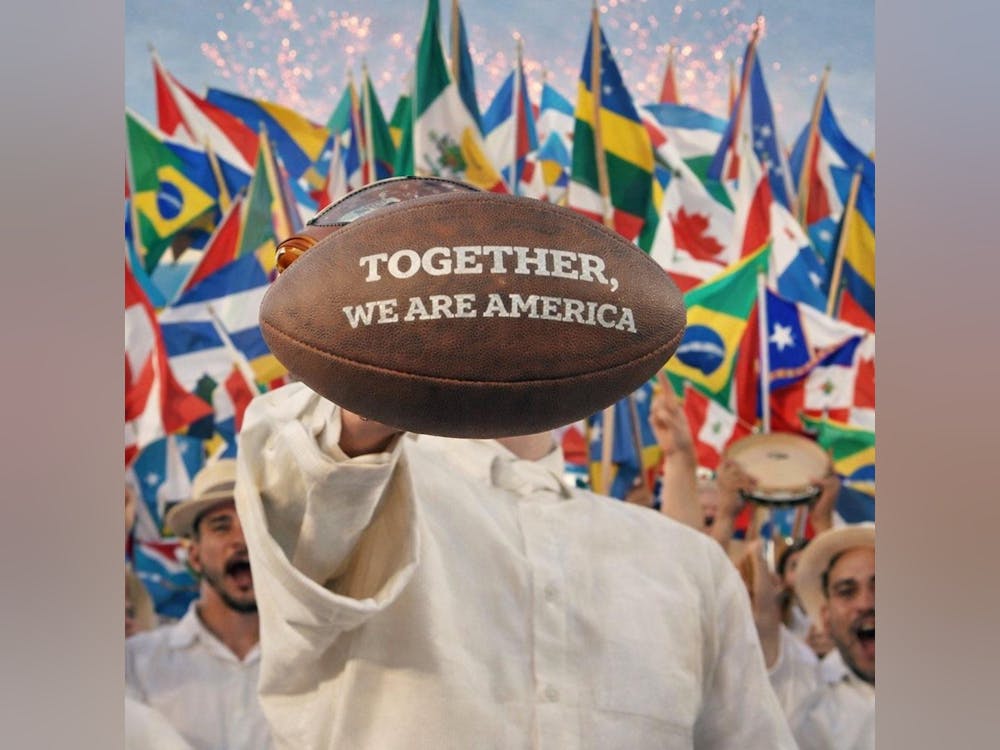
In the family favorite game of trivia, red and blue cards scattered on the wooden table ask silly questions about geography and fun history facts. But following the pop-culture boom with the Bad Bunny Super Bowl show, January and February’s family game nights brewed heated debate at kitchen tables around the country. Those arguments were about Puerto Rico and its citizens, and despite tensions lasting nearly 130 years, Puerto Rico and America’s relationship is still strained. But this time, the conflict is the centerpiece of a brutal rivalry on the internet and at home.
Puerto Rico and the United States have always had a complex relationship. Starting in the early 20th century, exploitation of the island was the American government’s main goal and that economic chokehold still remains today. Year after year, the United States has made it clear that Puerto Ricans may be American citizens, but they are not equal citizens. Although the Bad Bunny show highlighted the conflict between the island and U.S. citizens, many people still do not understand the century-long history behind the bad blood.
The year 1508 marked the colonization of Puerto Rico by Spanish Conquistador Juan Ponce de Leon. Puerto Rico has not had independence since. In 1889, America fought for the right to own many countries under Spanish control and Puerto Rico was one of those countries. After the U.S. won the Spanish-American war, the U.S. invaded Puerto Rico, with no intention of liberation. Puerto Rico, Cuba, the Philippines, and Guam were sold by Spain to the U.S. for $20 million. In addition to Puerto Rico’s absence at the negotiating table, the treaty also began the long-standing disregard by the U.S. for the island.
Starting in 1901, the U.S. began finding loopholes to profit from Puerto Rico. The Supreme Court ruled that Puerto Rico was “belonging to but not part of” the U.S., labeling the island as an “unincorporated territory inhabited by alien races.” This doctrine meant the Constitution didn’t apply to Puerto Rico. Following the doctrine, the U.S. decided that Puerto Rico would be made into a profit center.
In 1920, the Jones Act was passed, ensuring only American built and operated ships could transport goods between the U.S. and the territory. This made basic necessities expensive for the island.
Then in 1976, Congress found a work-around for a tax break to avoid paying federal taxes. Section 936 of the Internal Revenue Code allowed companies to operate in Puerto Rico without paying federal tax on their profits. This didn’t last long as the Congress prioritized balancing the budget in 1996, ending the tax break. Thousands of high paying jobs were gone overnight. The tax base collapsed, and Puerto Rico entered a recession. The island was forced to start borrowing money from the states.
Over the years, the island’s debt ballooned to $70 billion. In 2016, the U.S. “solved” this problem by creating the Puerto Rico Oversight, Management, and Economic Stability Act (PROMESA). This act slashed pensions, closed hundreds of schools, and ended the University of Puerto Rico. Because of PROMESA, Puerto Rico’s elected governor now answered to a U.S. appointed board, losing even more of the little independence Puerto Rico had.
Looking at it Today
The discrimination of Puerto Ricans has always been there. But the announcement of Bad Bunny’s halftime show brought an entirely new wave of racist comments and prejudice. On X, one user wrote, “Can we drop Puerto Rico? Like we don’t support them anymore? These people don’t appreciate us… WE DON’T OWE ANYONE.” Then, another user tweeted, “Parasitic territory… get rid of it.”
Social media can be a harbor for political discourse. But the discussion that arose from the 2026 Super Bowl performance could only be explained as a result of high political tensions accompanied by a lack of education.
Following the performance, many labeled the Puerto Rican people as ungrateful or accused them of leeching off the largess of America, but that’s not an accurate reading of history.
Dating back for centuries, even before America’s involvement with the island, Puerto Rico has been a home of many valuable resources, like sugar. Despite U.S.’s denial that the island is a colony, it’s still very much viewed as one.
Puerto Rico hasn’t experienced full independence for more than 100 years, and as a result, they’ve suffered from the exploitation of their resources.
Although the tension between the American and Puerto Rican people has heightened following the Bad Bunny performance, the conflict isn’t a new issue. Within the past decade, various political actions have further strained relations.
Almost a decade after the Obama administration enacted PROMESA, President Trump attempted to dismiss five out of seven of the board members that oversee the territory’s finances. A federal judge blocked the attempt for violation of due process and PROMESA.
The Financial Oversight and Management Board for Puerto Rico (FOMB) was created after PROMESA. The board oversees the island’s finances. In several studies conducted by the polling firm Data for Progress, it was found that nearly 70% of the Puerto Rican people strongly displayed unfavorable views of the FOMB and the U.S.’s way of managing the island’s economy.
Actions like these have led to the racism and discrimination appearing on social media today which stems from America’s colonial roots and unless something is done by the U.S. administration, things will stay that way.
But beyond the overwhelmingly negative narrative, there has also been a wave of support for Puerto Rico. In the same X post calling for the U.S. to cut ties with Puerto Rico, a third X user wrote, “Puerto Rico should be free…[n]o nation on Earth should be subjected to outside interference by imperialist forces.” In response, a final user said, “God bless America. God bless Puerto Rico.”
Before opening your social media accounts or sharing your opinion at home, remember that education is key. Inform yourself before stating what you think versus stating what you know. As the conflict continues, and the people are divided, there’s a key piece to remember about U.S. citizens and Puerto Ricans: everyone is human, and everyone is American.