

In 1400 days, climate change will be irreversible, as told by the Climate Change Clock, a public art and advocacy project based in New York City. That’s slightly less than four years. This harsh truth is a ticking time bomb hovering over the planet. It’s a devastating reality, and a tragic, but definite, result of society’s actions. As the atmosphere infuses with smoke, and the water of the world’s largest rivers depletes, Artificial Intelligence continues to rise. Data centers are populating century-old farmlands, and homes are being sold for the hopes of rezoning. Such projects like these are for the benefit of technology only and the demolition of the planet’s ecosystems as it has been and as it once was. This fact poses a question: Is artificial intelligence worth the consequences that it brings and has already brought? Or is the safety and livelihood of the earth a higher priority?
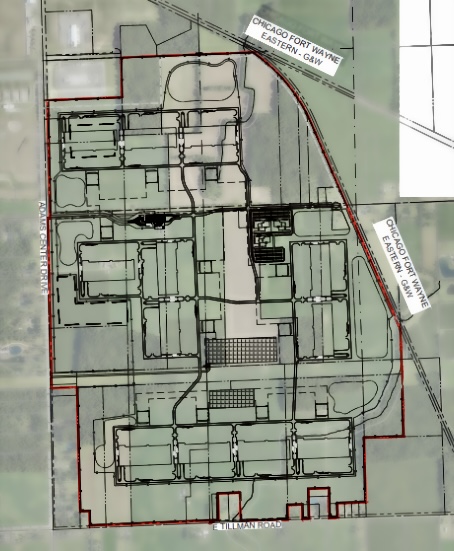
In recent years, database construction has become overwhelmingly common in Indiana. Large companies like Meta, Amazon, and Google hope to, if they haven’t already, inhabit previously owned farmland. Almost two years ago, in late 2023, Google announced plans for an approximately 700-acre database that will be located in Fort Wayne. This project, named “Project Zodiac,” is still in development. Two years and two billion dollars later, construction is not complete. However, Indiana is already experiencing negative effects due to these data campuses. For example, according to the independent website, Mirror Indy, traces of mercury and lead have been found within the city’s water. Not only do these things affect humans, but also animals and their habitats. If citizens and other living organisms are already suffering, what does this mean for the future?
Think of the entirety of Indiana as a singular human body. The human body lives off of water, food, and air–just like that of many living things. Now, envision these databases (Google, Amazon, Meta, etc.) as viruses or infections. One of these centers already causes damage to the body. The air that it is breathing is full of toxins, it’s lacking the food it needs, and the water it drinks is contaminated. The body needs time to heal. Its cells work together to regain stability and return to their normal state. However, one virus (one database) was not all. The body is still actively recovering from the first infection, but with the flick of a wrist, three more appear. The cells go to war. It’s a domino effect: the virus spreads, and eventually, the body is incapable of returning to its original form. Indiana will be in this situation; it will be incapable of cycling back to its initial state. At such a point, it’ll be far gone.
Despite the obvious environmental consequences that AI has been – and will continue to bring – to Indiana, there is no sign of large databases leaving the area anytime soon. Even if certain projects are denied, like the Franklin Township Google database, another city will eventually accept the offer and will receive the financial benefits. In this case, whoever denied the opportunity will be stuck watching from afar. At the end of the day, why would some big city throw away such an economic opportunity and give it to someone else?
Although economic conditions will most likely guide the decisions of future database construction, there are ways students can take a stand against the issue. AP Biology and Zoology teacher Megan Obremski recognizes that in order to protect the environment, changes need to be made in the way humans live.
“Students can become agents of change by working to educate themselves and then educating others,” Obremski said. “Large-scale changes in choices and priorities are the only way to make the changes our planet needs right now.”
Making smart choices is the first step to protecting the planet. At NHS, students can become more water-aware. For example, they can steer away from running faucets for extended periods and try to prevent any water wastage. Alongside this, students can also avoid using forms of AI. This may include ChatGPT or Google AI services.
Small steps in the right direction lead to bigger leaps and eventually large outcomes. The environment is suffering, and AI is contributing to the problem. The slower society is to take a stand, the worse off the planet will be. 1400 days. That’s how much time is left.